


St. Matthew, Heraklion
| Open to the public: | 08.00 until sunset |
|---|---|
| Entrance fee: | Free admission |
| Supervised by: | Holy Archdiocese of Crete |
| Access and walking difficulty: | Difficulty rating, 1 |
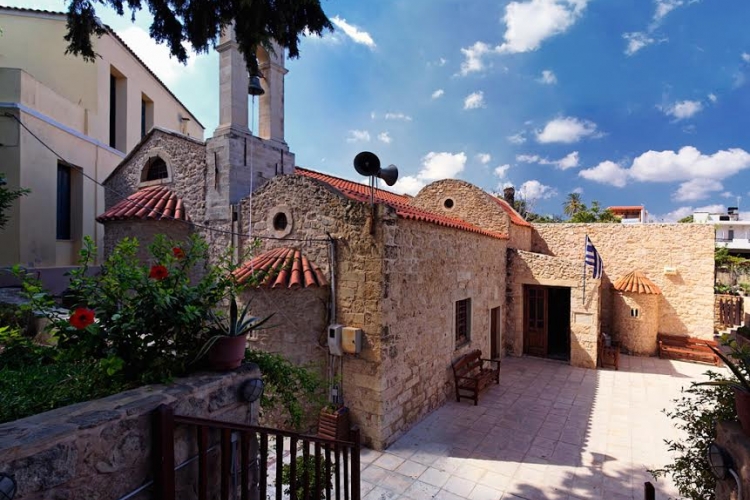
Approximately 500m south of the Cathedral of St. Minas, within the historical district of Heraklion we have the church of St. Matthew. The present building dates back to just after the earthquake of 1508. However, the earliest references in the lists of churches of Candia, state that the first temple reached as far back as the second Byzantine period. Regarded as “Great and Unique”, St. Matthew was inextricably connected with the life of the city. During the first Ottoman period of Megalo Kastro - Grand Castle - all members of the Christian community attended its services. The Sinai order had granted it a Centre of Worship to the Archdiocese of Crete immediately after Candia fell into the hands of the Ottomans. St. Catherine of Sinai became a succursal when the Ottomans converted it to a Mosque after their conquest of Candia. The seat of the Archbishop, as well as its paintings and pulpits that until then adorned St. Catherine had been transferred. However, we cannot state with certainty today whether the school of iconography of St. Catherine operated within its grounds during this period, though it was housed there until its relocation to the small church of Agios Minas around 1750. The school itself continued to function because of father and son painters Kastrofilaka, and by J. Kornaro who had attended the school.
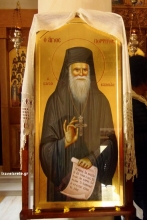
Today the temple hosts a remarkable collection of icons; including important examples of the Late Cretan school of Iconography such as “The Crucifixion” by George Kastrofilakas 1752. “St. Titus” as well as scenes of his life. Ten martyrs” by John Kornaro 1773. But most importantly those predominantly of the Cretan School of Iconography. Two unsigned icons by Michael Damaskinos; “St. Symeon God-Receiver “and “St. Catherine” by Jeremiah Palladas, “Crucifixion” attributed to Palaiokappa together with other famous artists as well as several unsigned icons from earlier times.
_750_500_s.jpg)


_566_400_s.jpg)



_370_220_s_c1.jpg)
 Botanical
 Culinary/Gastronomy
 Geology
 Hiking
 Historical
 Village experiences
 Sports activities
 Cultural
 Archaeology
 Shopping
 Religious Tourism
 Congress
 Accessible Tours


